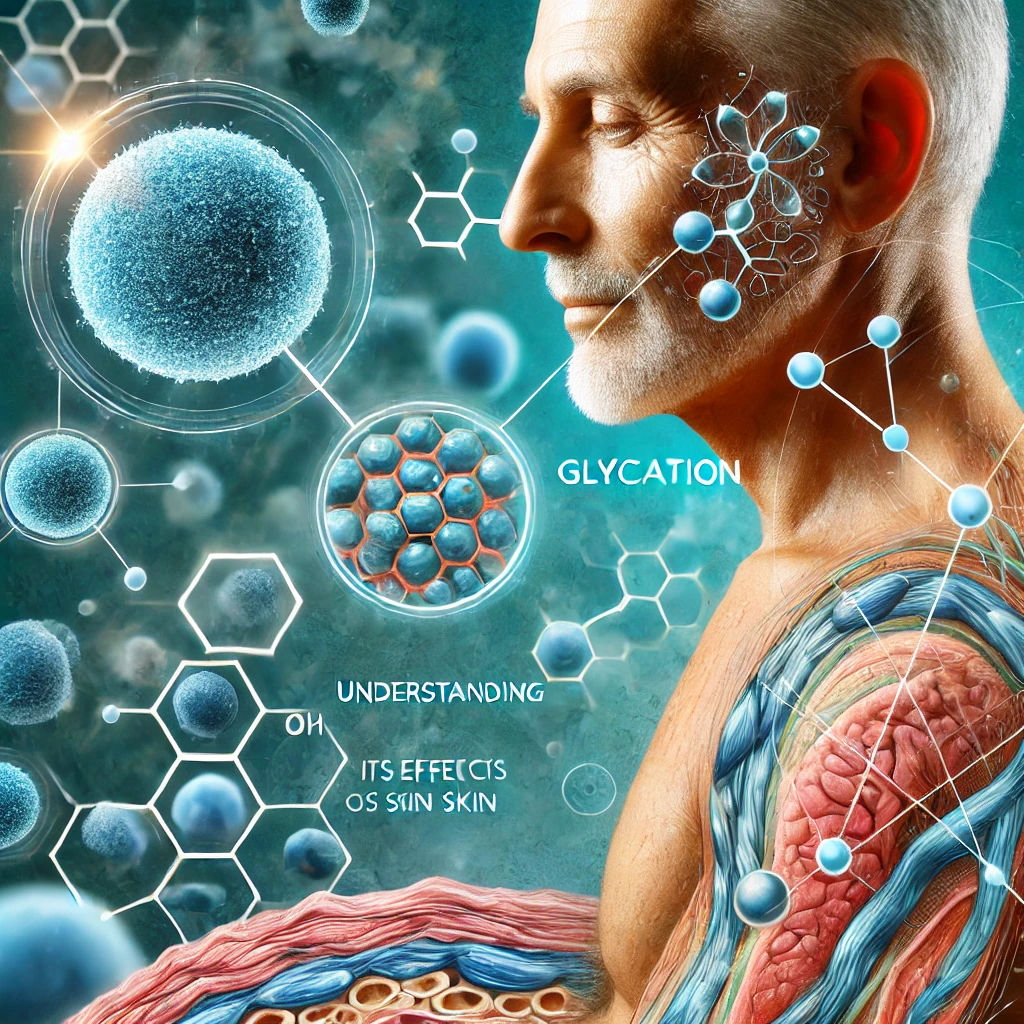
Understanding Glycation and Its Effects on Men’s Skin Aging

Learn how glycation impacts men’s skin aging, learn prevention strategies, and understand the science behind this crucial aspect of male skincare and healthy aging.
Introduction: The Glycation-Aging Connection
Did you know that the same process that makes your steak brown when grilling could be accelerating your skin’s aging? It’s called glycation, and it’s revolutionizing how we think about men’s skincare. As someone who’s spent years researching skin aging processes, I can tell you that glycation is one of the most fascinating – and concerning – aspects of how our skin ages.
For a deeper dive into keeping your skin youthful, check out The Ultimate Guide to Men’s Anti-Aging Skincare – packed with tips, routines, and expert insights tailored just for you.
Key Takeaways:
- Glycation is a natural chemical process that damages collagen and elastin
- Men’s skin is particularly vulnerable to glycation due to its unique structure
- Diet, lifestyle, and targeted skincare can help combat glycation effects
- Prevention strategies are more effective than trying to reverse damage
- Understanding glycation is crucial for maintaining youthful, healthy skin

The Science Behind Glycation: What Every Man Should Know
Let’s dive into the nitty-gritty of what glycation actually is. Think of glycation as a molecular “caramelization” process happening in your skin. When sugar molecules in your bloodstream attach to proteins like collagen and elastin, they form harmful compounds called Advanced Glycation End Products (AGEs). These AGEs are like molecular vandals, damaging the structural proteins that keep your skin firm and elastic.
Why should men particularly care? Our skin has some unique characteristics that make this process especially relevant:
- 20% thicker than women’s skin
- Higher collagen density
- More active sebaceous glands
- Different hormonal influences
These differences don’t make us immune to glycation – if anything, they make understanding and preventing it even more crucial.
How Glycation Affects Male Skin Structure
The impact of glycation on men’s skin goes beyond surface-level changes. When AGEs accumulate, they create a cascade of effects:
- Collagen Cross-Linking
- Makes skin less flexible
- Creates deep wrinkles
- Reduces skin’s ability to repair itself
- Elastin Damage
- Decreases skin’s bounce-back ability
- Leads to sagging
- Creates a weathered appearance
- Inflammation
- Triggers oxidative stress
- Accelerates aging process
- Can worsen existing skin conditions
The Male Glycation Difference: Unique Challenges
Men’s skin aging patterns differ significantly from women’s, particularly when it comes to glycation. Our higher testosterone levels and thicker skin create a unique environment where glycation can have profound effects:
- Deeper wrinkles when they do form
- More prominent expression lines
- Greater impact on skin firmness
- Different distribution of aging signs
Lifestyle Factors That Accelerate Glycation
Understanding what speeds up glycation is crucial for prevention. Several factors can accelerate this process:
Environmental Triggers:
- Sun exposure (UV radiation)
- Pollution
- Smoking
- Stress
Dietary Contributors:
- High-sugar foods
- Processed carbohydrates
- Fried foods
- Excessive alcohol
The good news? Many of these factors are within our control.
Prevention Strategies: Fighting Back Against Glycation
Taking action against glycation doesn’t require a complete lifestyle overhaul. Here are evidence-based strategies that work:
Dietary Modifications:
- Reduce refined sugar intake
- Choose low-glycemic foods
- Increase antioxidant-rich foods
- Stay hydrated
Lifestyle Changes:
- Regular exercise
- Adequate sleep
- Stress management
- Sun protection
Targeted Skincare Solutions
The right skincare routine can make a significant difference in combating glycation:
Essential Ingredients to Look For:
- Retinoids
- For further reading, see Retinol for Men: Benefits, Usage, and Top Product Recommendations).
- Peptides
- For further reading, see The Science Behind Peptides in Anti-Aging Skincare for Men.
- Antioxidants
- For further reading, see The Importance of Antioxidants in Men’s Anti-Aging Skincare
- Anti-glycation compounds
Morning Routine:
- Gentle cleanser (we recommend this La Roche-Posay cleanser)
- Antioxidant serum
- Moisturizer (try this Neutrogena Moisturizer + SPF)
- Broad-spectrum SPF
Evening Routine:
- Deep cleanse
- Anti-glycation treatment
- Retinoid product (try this clinical-grade retinol from Paula’s Choice)
- Rich moisturizer
Read how to develop an effective anti-aging skincare routine here.
Measuring Progress: Signs of Improvement
How do you know if your anti-glycation efforts are working? Look for these positive changes:
- Improved skin firmness
- More even skin tone
- Reduced appearance of fine lines
- Better skin texture
- Enhanced natural glow
Future Developments in Anti-Glycation Technology
The field of anti-glycation research is rapidly evolving, with promising developments on the horizon:
- New ingredient technologies
- Advanced delivery systems
- Better understanding of glycation mechanisms
- Personalized treatment approaches
Our Take
Glycation might sound like complex biochemistry, but its effects on men’s skin aging are very real and significant. The good news is that armed with this knowledge, you can take concrete steps to protect your skin and maintain its youthful qualities longer. Remember, it’s never too early – or too late – to start taking care of your skin.
The key is consistency and a holistic approach. Combine smart dietary choices with targeted skincare and lifestyle modifications. Think of it as an investment in your future self. After all, healthy skin isn’t just about aesthetics – it’s about maintaining one of your body’s most important organs.
Want to get started? Begin with one small change today, whether it’s cutting back on sugar or adding a quality moisturizer to your routine. Your future self will thank you!
The field of glycation research continues to evolve, bringing new insights and solutions. Stay informed, but remember that the fundamentals of skin health – protection, nourishment, and prevention – remain constant. Here’s to maintaining healthy, resilient skin at any age!
For a deeper dive, read our Ultimate Guide to Anti-Aging Skincare for Men.